Explore the Collection
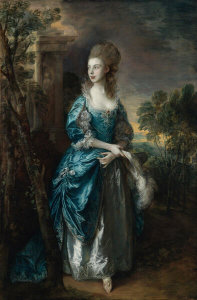
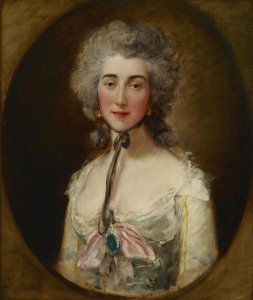
Sarah Hodges (1737–1770), the only child and heir of Ipswich-based parents, was among the last sitters Gainsborough painted before moving to the fashionable spa town of Bath in late 1759. Perhaps commissioned to mark her twenty-first birthday, the portrait adopts a floral motif familiar in portraits of the previous century by Anthony van Dyck. The sitter holds a rosebud while a rose unfurls in the bush at left, symbolizing the promise of maturity, an apt motif for an unmarried heiress. Adorned with a black choker and white feather pompom on her unpowdered hair, she wears a blue watered-silk dress à la française, its front opening covered by a stomacher (triangular piece of fabric) decorated with blue scalloping. The painting represents a transition between Gainsborough’s early conversation pieces and the full-sized portraits he would paint in Bath. Here, Gainsborough demonstrates his range of paint handling, from the feathery strokes of Sarah’s face to the tightly painted flowers that recall seventeenth-century Dutch still lifes to the looser rendering of her hands and dress.
