Explore the Collection
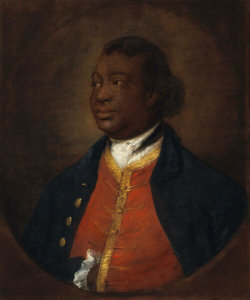
Gainsborough did not employ a team of assistants like some of his fellow artists. To achieve the signature style of his paintings, he had the help of a single long-term assistant, Gainsborough Dupont (1754–1797), the son of his sister. Gainsborough portrayed his nephew as many as eight times, perhaps inspired by his attractive features or simply because he was a convenient model. Dupont collaborated with his uncle for about two decades as model, assistant, and studio aide. He cultivated a style of painting close to Gainsborough's and, after his uncle's death, achieved limited renown. The unusual size of this canvas and its sketchiness suggest its experimental nature. The turn of the head, sidelong gaze, falling lace collar, and long, full hair reflect Gainsborough's study of Van Dyck and echoes especially the figure of Lord Bernard Stuart in his copy after Van Dyck's portrait. This close connection to Van Dyck's prototype—while showcasing Gainsborough's distinctive paint handling—suggests a date in the early 1770s. An anecdote describes Gainsborough placing a "last head" on his easel at the time of his death. It is thought to have been this painting.
